FAQs
ABOUT GOOD BUDS
-
GOOD BUDS is a family-run craft cannabis producer founded by brothers Tyler and Alex Rumi on Salt Spring Island, BC. We grow small-batch flower, pre-rolls, and concentrates — all from our own farm, using our own house-bred genetics, in living organic soil. Independent since day one.
-
A few things that aren't common in cannabis: we grow our own genetics rather than licensing them, we're certified organic by the FVOPA, we water exclusively with collected rainwater, and we've been doing outdoor cannabis longer than anyone with a federal licence in Canada. We're not trying to be the biggest — we're trying to make the best version of what we grow.
-
Our farm is at 1876 N. End Rd. on Salt Spring Island, British Columbia — about an hour by ferry from Vancouver. Everything we sell comes from this farm.
-
Yes. In 2019, Health Canada issued us the first outdoor cultivation licence in the country. Before that, we held an indoor licence from 2018. We've been farming cannabis on Salt Spring Island since 2017.
-
Yes. Good Buds was founded by brothers Alex and Tyler Rumi on Salt Spring Island, BC. Tyler leads all cultivation decisions; Alex handles operations, sales, and strategy. There are no outside shareholders calling the shots — every decision gets made by the people actually growing the product.
-
Yes. We're bootstrapped and family-owned. We don't have public-market investors or corporate backers. That independence matters to us — it means we can prioritise cultivation quality over quarterly output targets.
-
Salt Spring Island sits in the Salish Sea off the coast of BC, surrounded by Pacific coastal air and a temperate marine climate. It's where our family already had deep roots, and it turned out to be a genuinely exceptional place to grow cannabis outdoors — long summers, consistent coastal airflow, and an agricultural community that takes growing seriously.
OUR STRAINS
Gluerangutan
-
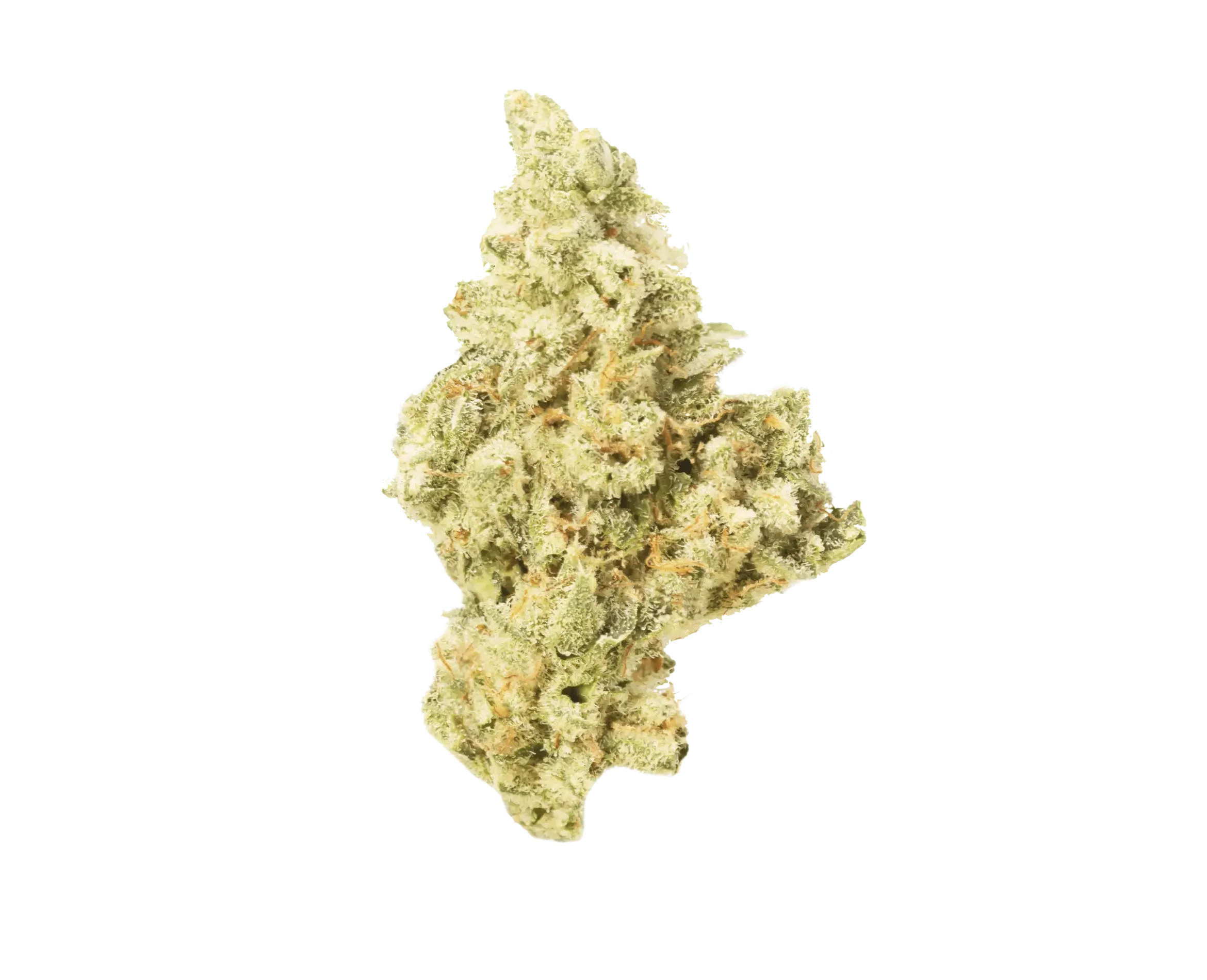
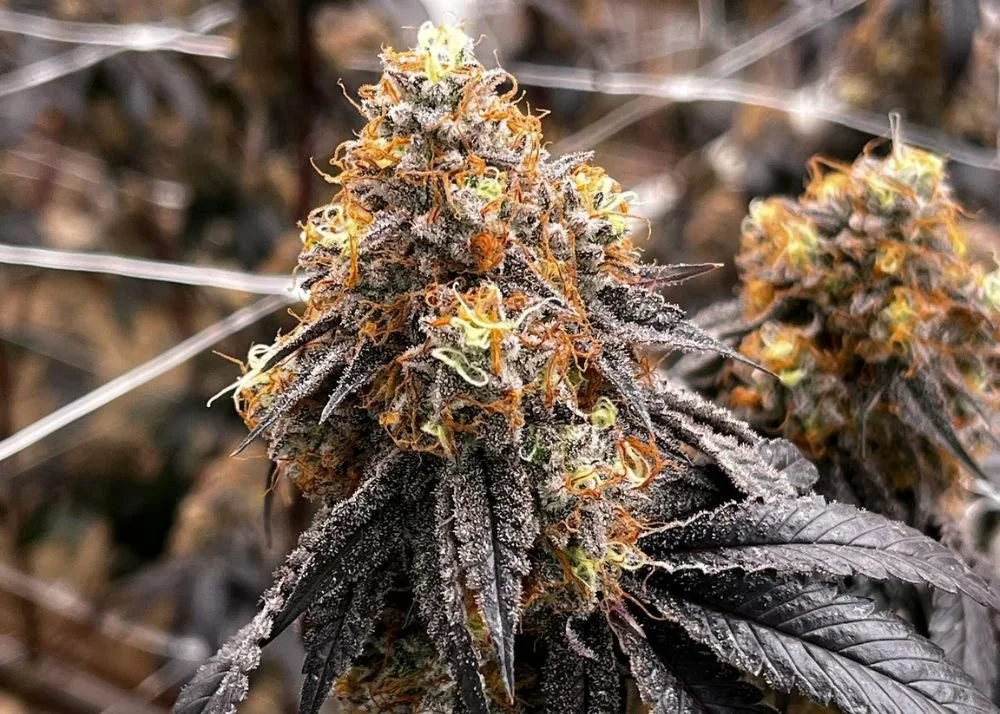
Gluerangutan is a sun-grown, FVOPA Certified Organic cannabis cultivar from GOOD BUDS. It’s a hybrid straint that was bred from a rare strain called Harambe, which is a cross of OG Kush × GG4 × Afghani Hash Plant. Our team pheno-hunted it from roughly 150,000 plants in 2019 and backcrossed it over three seasons to stabilise the genetic into what it is today. It's grown exclusively outdoors on our family farm on Salt Spring Island in living soils. It’s irrigated entirely with rainwater, and consistently tests at 3.5–4.8% total terpenes — the highest total terpene range in the GOOD BUDS portfolio.
-
Gluerangutan’s flavour is pretty complex, but can best be described as having a combination of lemon, pine and fuel. It’s trans-caryophyllene dominant with humulene as a co-primary terpene — a spicy, woody, earthy backbone with limonene brightness and a clean fenchol/linalool mid-layer. The overall character is louder and more complex than most outdoor flower: spicy-woody-citrus with a resinous finish. A bit like a lemon, pine cleaner. Total terpenes test at 3.6–4.8% across COA-verified lots.
-
Gluerangutan's terpene profile is trans-caryophyllene dominant (0.92–1.28%), with α-humulene as a consistent co-primary (0.32–0.46%). Secondary terpenes include limonene (0.47–1.07%), linalool (0.16–0.35%), and fenchol (0.19–0.26%). Trans-nerolidol appears in roughly six of nine tested lots, adding floral-woody depth when present. Total terpenes: 3.6–4.8%. Which is the highest in the GOOD BUDS portfolio and high for the cannabis category broadly.
-
Gluerangutan is a hybrid strain, meaning it doesn’t neatly fit into either the sativa or indica categories. The indica/sativa distinction is a limited way of predicting how a strain may be experienced. Terpene profile and growing environment are also useful guides. Gluerangutan's caryophyllene and humulene dominance give it a distinctly earthy, spicy character that sits apart from citrus-terpinolene or myrcene-dominant products on the same shelf.
-
Gluerangutan is grown exclusively outdoors on Salt Spring Island, BC, on our FVOPA Certified Organic family farm. It’s grown in living soils and is irrigated entirely with rainwater. The combination of our outdoor environment and the living soils, which we’ve built up over eight seasons from rocky, depleted ground, are what help produce the loud terpene profile this strain is known for. Surprisingly, we’ve found that Gluerangutan actually performs better outdoors than indoors: with denser, stickier buds than typical outdoor cannabis, and a higher potency outdoors than when we grew it inside. It wasn’t what we initially were expecting when we started growing Gluerangutan 6 years ago, and it’s the opposite of what most people expect when they think of outdoor vs. indoor cannabis.
-
Most cannabis strains are grown indoors because controlled environments produce more consistent results. Gluerangutan is the exception — it actually produces denser, stickier buds outdoors than indoors, which is the reverse of typical outdoor behaviour. Tyler made the decision to keep it outdoors only after comparing indoor and outdoor expressions directly. The Salt Spring Island microclimate, the living soil beds, and the full sun season are part of what produces the 3.6–4.8% total terpene load the strain is known for.
-
Harambe is a rare genetic that was created from a cross of OG Kush × GG4 × Afghani Hash Plant. It's not widely available commercially. We took that genetic and back-crossed it with itself to further emphasize it’s loud terps and aromas. Harambe's terpene expression is typically heavier on the spicy-woody caryophyllene and humulene side than a standard GG4, and is likely from its OG Kush parent. It’s part of what makes Gluerangutan's profile distinct from other GG4-derived strains in the market.
-
Gluerangutan is built on GG4 genetics. Just like a typical Glue strain, Gluerangutan buds are caked in trichomes and are very sticky to touch. So sticky that they’ll often re-form into a ball overnight after we’ve milled it for pre-rolls! Gluerangutan’s flavour comes across differently than a typical GG4 (or Original Glue) strain. GG4 is typically caryophyllene and myrcene dominant (earthy, gassy, and dank), while Gluerangutan is layered with humulene and limonene, giving it more of a spicy-woody-citrus profile. As a result, Gluerangutan’s terps are more complex and less one-dimensionally “gassy” than most GG4 strains. Gluerangutan also tests significantly higher in total terpenes: 3.6–4.8% versus a typical GG4, which might come in closer to 1–2%. Gluerangutan was pheno-hunted from 150,000 plants and was stabilized over three seasons of backcrossing it with cuts that were selected specifically for that louder, and more interesting terp expression.
-
People who gravitate toward GG4, OG Kush, or Afghani-lineage cultivars tend to connect with Gluerangutan. Gluerangutan is a step up in terpene complexity from most GG4 derivatives at market. Gluerangutan shares the same resinous, sticky & earthy backbone of the GG4 family, but with a more complex terpene profile thanks to its OG Kush parent. If you appreciate caryophyllene-dominant profiles with citrus and woody depth rather than pure gassy/dank, Gluerangutan sits in that lane. Customers who like popular OG Kush crosses like Pink Kush or Comatose often find that Gluerangutan has a lot of similarities to these strains, given the OG Kush lineage they all share.
-
Gluerangutan is available in flower, pre-roll formats, and full spectrum 510 and all-in-one vapes in BC and Alberta. Ontario listings are live and expanding in 2026 too. Check our store finder for current availability near you.
-
Gluerangutan is available at licensed cannabis retailers across BC, Alberta, and Ontario. Use our store finder to locate a retailer near you carrying current stock.
Mango Cake
-
Mango Cake is an indoor-grown, FVOPA Certified Organic strain from GOOD BUDS. It was bred from Mango Taffie × Wedding Cake. Mango Taffie is a GOOD BUDS original strain — a cross of OG LA Affie and Hawaiian that we bred on our Salt Spring Island, BC. Mango Cake consistently tests at 28–33% THC with 2.4–3.5% CBG — four to six times the CBG level of most cannabis in the Canadian market. Available in BC and Alberta in flower, pre-roll, and vape formats.
-
Mango Cake takes most its aroma and flavour cues from its Mango Taffie parent. It boasts a sweet, tropical mango profile, with a bit of terpinolene-influenced afterburn like the Mango Taffie. The Wedding Cake influence is more subtle - with a more creamy mouthfeel, and hint of vanilla on the exhale. Outdoor-influenced lots (vapes) are a bit different from the flower, with a bit more spice and depth to the indoor Mango Cake flavour and aroma profile. Mango Cake typically tests at 3.1–4.4% total terpenes when dry, with vapes often testing higher.
-
Mango Cake has two documented terpene clusters. Indoor lots (Dry Flower & Pre-Rolls) are terpinolene-dominant: α-terpinolene at 0.92–1.50%, supported by cineole, bisabolol, and linalool. These give off a fresh, sweet, tropical mango profile, with notes of vanilla - similar to ripe mangoes and cream. Outdoor-influenced lots (vapes) are caryophyllene-forward: trans-caryophyllene at 0.68–1.06%, with nerolidol, humulene, linalool, and limonene. While similar, the outdoor lots tend to have a bit of a spicier and more complex profile - more like a Mango fruitcake than fresh mangoes and cream. Total terpenes typically hit between 3.1–4.4% as flower, with vapes typically testing higher.
-
Mango Cake is a sativa-leaning strain — Mango Taffie (OG LA Affie × Hawaiian) crossed with Wedding Cake (Triangle Kush × Animal Mints). The indica/sativa label is a limited guide to how a cultivar expresses. With 2.4–3.2% CBG, Mango Cake tests much higher than typical cannabis strains in CBG, adding to its unique profile.
-
Mango Cake flower and pre-rolls are grown indoors on our Salt Spring Island farm in living soil beds that have been in continuous use since 2019. Vape and concentrate inputs use outdoor-grown Mango Cake from the same farm. Two operations, two purposes — the indoor environment is where Mango Cake's bud structure and CBG expression are most consistent, while outdoor lets us reach more customers with high-quality Living Soil Organic vape inputs.
-
Mango Cake carries 2.4–3.2% total CBG — most cultivars test below 0.5%. The elevated CBG traces back to its parent strain Mango Taffie, a GOOD BUDS original, and was strengthened by the Wedding Cake cross. It wasn't a selection target; Tyler chose the phenotype based on its aroma profile and effects, and the COA confirmed it after the fact.
-
CBG (cannabigerol) is a minor cannabinoid that's the biosynthetic precursor to THC and CBD. It's typically present at below 0.5% in mature flower because it converts to other cannabinoids as the plant develops. Strains with consistently elevated CBG at harvest are uncommon. Mango Cake tests at 2.4–3.2% across multiple COA-verified lots, which is roughly 5x the average cannabis found in Canada.
-
Mango Taffie was a GOOD BUDS original strain bred on Salt Spring Island from LA Affie × Hawaiian. It ran for over three years across five provinces, won the KIND Awards 2020 Concentrate of the Year, and established GOOD BUDS' early reputation through its terpinolene-dominant mango character and elevated CBG. When its THC fell behind where consumer expectations were heading, we crossed it with Wedding Cake over two years of indoor phenotype development to produce Mango Cake. The mango carried forward. Wedding Cake added potency, bud density, and a creamy vanilla finish.
-
Growing environment drives the difference. Indoor lots (flower & pre-rolls) express terpinolene dominance — the maternal Mango Taffie character. Outdoor-influenced lots (vapes & concentrates) shift toward caryophyllene dominance — more Wedding Cake influence. Both are verified across multiple COA-tested lots; neither is a defect.
-
We grow each strain where it performs best. Mango Cake’s bud structure is at its best in a controlled indoor environment. Outside it’s looser buds make it only viable for vape and concentrate inputs. Gluerangutan and Timewarp are different - both actually perform better outside, which is a rarity among contemporary cannabis strains.
-
Live resin uses fresh-frozen plant material harvested immediately after cutting, preserving more of the original terpene character. Cured resin uses dried and cured material — slightly less top-note brightness, more depth. Both Mango Cake vape formats use outdoor-grown inputs from our Salt Spring Island farm.
-
Consumers coming from terpinolene-adjacent strains — Super Lemon Haze, Sour Diesel, Ghost Train Haze — tend to connect with Mango Cake's indoor expression: same aromatic family, warmer and more tropical. If you're Wedding Cake, Wedding Pie, or Pink Cookies fans, the outdoor-grown vape lots will feel familiar — more caryophyllene-forward and dessert-adjacent. Either way, the CBG story and the Salt Spring Island lineage are specific to this strain.
-
Mango Cake is available in 3.5g flower, 7g flower (BC only), 2g pre-roll 3-pack, 5g pre-roll 5-pack, cured resin AIO vape, and live resin 510 cartridge — in BC and Alberta. All flower and pre-rolls are indoor living soil. Vape inputs are outdoor-grown on the same Salt Spring Island farm.
-
Mango Cake is available at licensed cannabis retailers across BC and Alberta. The flower is also coming soon to Ontario. Use our store finder to locate a retailer near you carrying current stock.
Timewarp
-
Timewarp is a GOOD BUDS strain that was bred by GOOD BUDS from the famous BC heirloom strain with roots on Texada Island, our neighbouring Gulf Island. Our current phenotype was selected by Tyler and the team for its dark cherry and orange citrus expression, potency, and resilience. It's sun-grown outdoors on Salt Spring Island and is one of the few true outdoor sativas available at licensed retailers in the Canadian regulated market.
→ Full strain guide: Timewarp
-
Timewarp's dominant aroma is dark cherry and orange citrus, with a soft floral finish. It’s closer to stone fruit and orange zest than the lemon-pine character of classic Texada Timewarp. Myrcene is dominant in the COA (1.0–1.6%), but our team’s sensory evaluation puts the nose clearly in cherry-citrus-floral territory. The bisabolol (0.19–0.41%), unusual for a BC heirloom-derived strain, and contributes the smooth, sweet-citrus finish. The aroma is notably loud in the jar - it’s noticeable right away when you open it up.
→ Full terpene breakdown: Timewarp strain guide
-
GOOD BUDS Timewarp is myrcene-dominant, with total terpenes of 2.9–3.4% across COA-verified lots. The full profile includes trans-caryophyllene (peppery, linalool (floral), bisabolol (soft floral finish), and humulene (earthy). Sensory evaluation reads as dark cherry and orange citrus — a profile that the terpene data alone doesn't fully explain, but that comes through clearly in the jar.
→ Full strain guide: Timewarp
-
Timewarp is sativa-leaning. The original Texada Timewarp is a sativa-dominant BC heirloom, and the GOOD BUDS phenotype preserves that structure and heritage. The plant's outdoor growth pattern, harvest window, and sensory aroma are all consistent with sativa-dominant ancestry. It's one of the few genuinely sativa-leaning outdoor strains in Canada's regulated cannabis market.
→ Full strain guide: Timewarp
-
Our Timewarp is grown outdoors on Salt Spring Island, BC — the same Gulf Island chain as Texada Island, where the original Texada Timewarp heirloom was developed. We grow in FVOPA Certified Organic living soils on our family farm. The plants are fed pure rainwater, with no synthetic nutrients or pesticides, meaning they get all of their nutrients from our living organic soils. Harvest: late September to first week of October. The microclimate — partial rain shadow, mild coastal temperatures, Gulf Island light — is essentially identical to where the original Texada Timewarp came from.
→ Full strain guide: Timewarp
-
Standard Texada Timewarp tests in the high teens to low 20s for THC — that's the authentic heirloom expression. GOOD BUDS Timewarp tests at 28 – 31% consistently. The aroma has shifted from lemon-pine to dark cherry and orange zest. Bisabolol appears at 0.19–0.41% consistently, even though this terp is not documented in heirloom Texada Timewarp profiles. The myrcene-dominant terpene foundation, sativa-leaning structure, outdoor hardiness, and late-September Gulf Island harvest are preserved from the original. Our house-cross introduced some rare California genetics (~25%) for robustness and potency. We then backcrossed it to pull the genetic back towards Timewarp.
→ Full strain guide: Timewarp
-
Timewarp is a myrcene-dominant, sativa-leaning outdoor heirloom with a cherry-citrus-floral aroma profile. Its closest genetic reference is Texada Timewarp itself. Sativa-leaning outdoor flower with BC heirloom lineage is genuinely rare on regulated shelves. There aren't many direct comparisons currently available. Consumers who prefer earthy, herbal, fruit-forward profiles over dessert or OG-gassy expressions tend to connect with it.
→ Full strain guide: Timewarp
-
Timewarp is available in 7g dried flower (BC, Limited Time Offer), 1g pre-roll singles and 7-pack pre-rolls (BC and Alberta), and a 1g Live Resin 510 cartridge (coming soon to BC).
Use our store finder to find a retailer carrying current stock.
Cookie God
-
Cookie God is an indoor-grown, FVOPA Certified Organic cannabis cultivar from GOOD BUDS, bred from Salty God × Dosidos. Salty God is a GOOD BUDS original — our selected God Bud phenotype, developed on Salt Spring Island. Dosidos is a California-bred indica hybrid from the OGKB × OG Kush lineage. Cookie God typically tests at 28 –31% THC with ~1% CBGa and a limonene-dominant, linalool-supported terpene profile. The aroma is peanut butter cookie with citrus brightness — dessert-forward and distinctly different from a typical God Bud expression.
→ Full strain guide: Cookie God
-
Cookie God is warm and dessert-forward: peanut butter cookie with citrus underneath. It doesn't smell like earthy, skunky God Bud — the selected Salty God phenotype pushed the profile toward the Hawaiian side of the God Bud genetic range, and the Dosidos cross added the OGKB cookie-peanut butter character.
→ Full terpene breakdown: Cookie God strain guide
-
ookie God is limonene-dominant with linalool as the consistent secondary terpene. Total terpenes: 1.4 – 2.3% across COA-verified lots. The limonene-linalool signature produces a citrus-floral, smooth profile — traceable to both parents: the Hawaiian genetics in Salty God contributing citrus brightness, the OGKB side of Dosidos contributing the smooth, slightly sweet bakery character underneath. It's the most refined and least dank terpene profile in the GOOD BUDS portfolio.
→ Full strain guide: Cookie God
-
Cookie God is indica-leaning. Both parents — God Bud (Hawaiian × Purple Skunk × mystery indica) and Dosidos (OGKB × OG Kush) — are indica-dominant. The limonene terpene profile gives it a brighter, cleaner character than most heavy indicas, but it's indica-leaning in growth structure, bud density, and behaviour. The indica/sativa label is a limited guide; more useful is the terpene profile: limonene and linalool, citrus-floral, dessert-forward, less dank.
→ Full strain guide: Cookie God
-
Cookie God is grown indoors at our Salt Spring Island facility in FVOPA Certified Organic living soils. The God Bud genetics it's built on were always an indoor strain — dense bud structure and tight internodes that perform best in a controlled environment. Our indoor living soil beds have been running since 2018.
→ Full strain guide: Cookie God
-
Salty God was a GOOD BUDS original — our selected God Bud phenotype, launched in 2021 as one of our first licensed strains. Tyler pheno-hunted it from dozens of plants, selecting for the phenotype that expressed the Hawaiian side of the God Bud genetics: limonene-forward, citrus and lightly grapey, with elevated CBGa that made it stand out in its own right. Cookie God is what happened when we crossed Salty God with Dosidos: it solved Salty God's THC limitation (high teens) while preserving the citrus-floral character and adding the Dosidos peanut butter-cookie nose.
→ Full strain guide: Cookie God
-
Both strains were bred by GOOD BUDS and use Dosidos as a parent, but they cross it with different partners and produce different aroma profiles. Dosi Melon (Dosidos × Watermelon Zkittlez) leaned fruity and tropical. The Watermelon Zkittlez genetics came through strongly in the aroma, making the strain smell like a melon fruit bowl. Cookie God (Dosidos × Salty God) goes the other direction: warmer, denser, more dessert-forward, with a peanut butter-cookie nose and citrus underneath. Cookie God also tests higher in THC than Dosi Melon. If you were a Dosi Melon person, Cookie God is the closest thing currently in the GOOD BUDS lineup.
→ Full strain guide: Cookie God
-
Cookie God sits in the Cookies-meets-OG family — peanut butter and dessert aromas, indica-leaning structure, citrus-floral terpene profile. If you're familiar with Dosidos, Biscotti Cookies, or God Bud, Cookie God occupies similar territory. It's not as earthy or skunky as a traditional God Bud expression, and not as gassy as a pure OG Kush cross. The limonene-linalool terpene signature makes it brighter and cleaner on the nose than most indica-dominant strains in the same category.
→ Full strain guide: Cookie God
-
Cookie God is grown indoors. The God Bud genetics it comes from — specifically the Salty God phenotype GOOD BUDS selected — perform better indoors than outdoors. The dense bud structure and tight internode spacing typical of God Bud lineage require humidity management that's easier to control in an indoor environment. GOOD BUDS' outdoor strains are Gluerangutan and Timewarp; indoor strains are Mango Cake and Cookie God. All are grown in FVOPA Certified Organic living soil on Salt Spring Island, BC.
→ Full strain guide: Cookie God
-
Cookie God is available in 3.5g flower (Alberta), 7g flower (BC), and 1×1g pre-roll (BC and Alberta). Grown indoors in certified organic living soil on Salt Spring Island.
-
Cookie God is available at licensed cannabis retailers in BC and Alberta. Use our store finder to locate a retailer near you carrying current stock.
HOW WE GROW
-
All of our cannabis is grown in living organic soil beds on Salt Spring Island — either sun-grown outdoors or under LEDs in small indoor lots, depending on the strain. We use no synthetic nutrients, no synthetic growing medium, and no pesticides. Plants are watered exclusively with collected rainwater and hand-tended through every stage of growth.
-
Living soil is a growing medium built around biology rather than chemistry. Instead of feeding plants with synthetic nutrients, living soil relies on the relationship between microorganisms — bacteria, fungi, and other organisms — and the plant's root system. The microbes break down organic matter in the soil and make nutrients available to the plant naturally. The result is a more complex root environment and, in our experience, better terpene retention. Our living soil beds are reused and amended season after season — no single-use growing medium, no plastic pots.
-
FVOPA stands for the Fraser Valley Organic Producers Association — a BC-based certifying body that audits farms against organic production standards. GOOD BUDS has been FVOPA Certified for both indoor and outdoor cannabis cultivation since 2020. It means a third party has verified that our inputs, growing medium, and practices meet certified organic standards. It's the closest thing to an organic certification that exists for cannabis in BC.
-
Our farm is FVOPA Certified Organic. That means everything we grow is grown in accordance to FVOPA-Organic standards. No pesticides. No synthetic chemical fertilizers. However, not every product that leaves our farm can carry an organic claim at the product level — some SKUs may undergo post-harvest processes like irradiation, which affects product-level organic status. When in doubt, look for the FVOPA certification mark on the packaging, or check the label.
-
Our plants are irrigated exclusively with rainwater we collect on-site — no municipal water, no synthetic nutrient additives. We don't add anything to the water. This is part of how we keep inputs as clean and natural as possible from the ground up.
-
e collect rainwater on-site and use it exclusively to irrigate our plants — no municipal water, no nutrient additives. In conventional cannabis growing, producers often "flush" plants with plain water in the final weeks before harvest to clear out residual synthetic nutrients. We've never needed to do that because we've never used synthetic nutrients. Our plants are grown in living soil from start to finish, fed only by what the soil biology produces naturally and the water we collect from rain.
-
It means we developed our strains ourselves rather than licensing genetics from a seed bank or another producer. Gluerangutan, for example, was pheno-hunted from 150,000 plants over three outdoor seasons before we selected the phenotype we grow today. We own these genetics — they're exclusive to our farm.
-
Tyler has been selecting and breeding cannabis genetics since before legalization. The process starts with growing out large numbers of plants from seed. In Gluerangutan's case, 150,000 plants over three outdoor seasons. Then we evaluate each one for structure, aroma, THC, trichome density, and terpene profile. The plants that stand out get selected, backcrossed, and grown again. It takes years to stabilize a phenotype worth bringing to market. Most licensed producers work with genetics they license from seed banks or other breeders. This ensures consistency. We grow ours from selections we made ourselves, which means the strains are exclusive to our farm and can't be easily replicated elsewhere.
-
It comes down to what each strain does best. Gluerangutan and Timewarp are sun-grown outdoors — they both perform better outside, developing denser structure and stronger terpene profiles in natural light. Mango Cake is grown indoors under LEDs, where we can control the environment to get the consistency and flavour expression the strain calls for. The decision is always strain-first, not cost-first.
-
es — all of it, whether grown indoors or outdoors. Hang-drying preserves the structure of the buds and allows for a slower, more controlled dry. We run a minimum 14-day hang-dry followed by a slow cure. The timeline is set by the plant, not the schedule.
-
We hang dry whole branches in climate-controlled rooms after harvest. This slow, whole-plant approach preserves trichome structure and allows moisture to dissipate evenly — which shows up in the texture, aroma, and burn of the finished flower. We don't tumble dry or use fast-dry equipment, since they tend to ruin the terpene profile from the plant and make inferior tasting buds.
-
Our farm is FVOPA Certified Organic, which means no synthetic inputs are ever used at the cultivation level. However, some cannabis products in Canada — including some of ours — are irradiated after harvest as a requirement for meeting Health Canada's microbial standards. We don’t irradiate as a standard practice. It’s only done when a batch requires it to pass Health Canada’s strict microbial limits. Where a product has been irradiated, it cannot carry an "organic" product claim even if it was grown organically. We're transparent about this. Check the product label for batch-specific information.
-
Outdoor cultivation eliminates the two biggest energy draws in cannabis production: artificial lighting and industrial HVAC. Our outdoor crop runs on sunlight. Our indoor production uses living soil in small micro-lot batches rather than single-use rockwool or synthetic hydroponic systems. We also use rainwater as our primary irrigation source, which reduces municipal water draw. We're not perfect, but we're building toward lower-impact growing at every stage.
-
Not necessarily — and this is something we think about a lot. Organic certification covers what goes into the soil and onto the plants. It doesn't govern what happens to the growing media afterward. Many certified organic producers use single-use plastic pots filled with pre-made organic soil mixes that get discarded after each harvest. That's certified organic, but it's not regenerative. At Good Buds, we use raised soil beds that we've been amending and reusing since 2019. The soil gets better each cycle. Nothing gets thrown out.
-
The gap is significant. Research consistently puts indoor cannabis among the most energy-intensive agricultural operations in existence — lighting, HVAC, dehumidification, and CO2 injection running around the clock. Outdoor cultivation eliminates all of that. The numbers vary by study and region, but the directional finding is consistent: outdoor-grown cannabis produces a fraction of the greenhouse gas emissions of equivalent indoor production. We're working on a more detailed breakdown of what our specific acreage translates to — that post is coming. In the meantime, the short version is: sunlight is free, and we use a lot of it.
-
Reusing and amending our raised soil beds is the whole point of living soil farming. Each cycle, we add organic amendments — compost, cover crops, microbial inoculants — to rebuild what the plants took out. Over time, the soil gets better, not depleted. It's the opposite of how most commercial cannabis operations work, and it's what "regenerative" actually means in practice.
Finding and Buying
-
GOOD BUDS is available at licensed cannabis retailers across BC, Alberta, and Ontario — over 900 stores in total. Use the Store Locator on our website to find your nearest retailer.
-
Item descriptionIn BC, you can purchase through the BC Cannabis Stores website, which carries our products alongside in-store retailers. In Ontario, the OCS.ca website carries us. In Alberta , sales are through licensed private retailers only. Many of these retailers in Alberta (and other provinces) do have online purchase options. Use our store finder to locate a retailer near you.
-
Stock varies by retailer and changes frequently. The best approach is to call ahead or check the store's own inventory, as we don't have real-time visibility into individual store stock. Our store finder lists retailers who carry Good Buds. From there, the retailer can tell you what's on shelf. Use the Store Locator on our website to find your nearest retailer:
-
Good Buds products are currently available in BC, Alberta, and Ontario through the provincial retail systems (BCLDB, AGLC, OCS). We sell through licensed cannabis retail stores — not direct to consumers. Use the store finder tool on our website to find your nearest retailer.
-
Yes! And it actually helps. Retailers take consumer requests seriously — if a store hears from multiple customers that they want a specific product, it influences their orders. Ask a budtender or store manager to look us up through their provincial wholesale system.
-
Canadian cannabis regulations require that all retail sales go through provincially licensed stores. We're not able to sell directly to consumers — every purchase flows through the provincial retail system. It's not our preference; it's the law.
-
Cannabis sales in Canada are final under provincial regulations — retailers generally cannot accept returns on opened cannabis products. If you have a quality concern, contact us directly at info@goodbuds.ca and we'll do our best to help.
OUR PRODUCTS
Our FLower & Pre-Rolls
-
Our flower is available in 3.5g and 7g formats depending on the strain and province. Gluerangutan and Timewarp — both outdoor strains — are available in 7g. Mango Cake indoor flower is available in both 3.5g and 7g. Check the store finder for what's available near you, as not all formats are stocked at every retailer. Learn more about our specific dry flower products here:
-
Same strain, same farm, same harvest — just different pack sizes. The 7g is the better value per gram. For strains where both sizes are available, the flower inside is identical. The only exception to this rule is the Gluerangutan - SMALLS 3.5g flower available in Alberta. The buds are from the same harvest as our Gluerangutan 7g, but we selected smaller buds to fit into the 3.5g jar easier. The THC range and terps aren’t any different, but if the “SMALLS” is better suited for value buys or bong buds, while the standard Gluerangutan 7g dry flower is more suited to people who prefer bigger, chunkier nugs.
-
A few reasons. One of them is just how organic cultivation works. Synthetically grown cannabis can be pushed harder: synthetic nutrients, controlled stress protocols, and dialled-in environment produce reliably high THC numbers. Organic, living soil cultivation doesn't work that way. We're feeding the soil, not the plant directly, and the plant takes what it needs. What organic growing tends to produce, when done well, is louder terpene profiles and more complex flavour. Our Gluerangutan consistently hits 3.6–4.8% total terpenes. That number is harder to achieve than a high THC percentage, and we think it tells you more about what the product is actually like to consume.
-
CBG (cannabigerol) is a minor cannabinoid found in cannabis. It's sometimes called the "mother cannabinoid" because it's a chemical precursor to THC and CBD. Most strains contain very little CBG by the time the plant reaches harvest. Mango Cake is unusual in that it consistently tests at 3%+ CBG — a meaningful amount compared to most commercial cannabis. We don't make claims about what CBG does, but it's a real differentiator in the cannabinoid profile.
-
Mango Cake. It consistently tests at 2.4–3.2% total CBG — four to six times the CBG level of most cannabis in the Canadian market. Gluerangutan and Timewarp have moderate CBG too. If CBG is something you're looking for specifically, Mango Cake is the strain.
-
CBGa (cannabigerolic acid) is the acidic precursor to CBG (cannabigerol), a minor cannabinoid. On Canadian cannabis labels and COA test results, the acidic form CBGa is what gets measured before decarboxylation. CBG has attracted growing scientific attention for its distinct interaction with the endocannabinoid system — separate from both THC and CBD.
GOOD BUDS strains consistently test above average for CBGa. Mango Cake leads the lineup at 2.5–3.5% CBGa. Timewarp, Gluerangutan, and Cookie God all carry ~1% or above. This appears to be connected to our living soil production method — microbially active beds maintained since 2017 on Salt Spring Island — though the exact relationship between soil biology and minor cannabinoid expression is still an active area of cannabis research.
-
Terpenes are the aromatic compounds that give cannabis its smell and flavour — the same class of compounds responsible for the scent of pine, citrus, lavender, and most other plants. In cannabis, terpenes are produced alongside cannabinoids in the trichomes. They contribute to the flavour and aroma of the product, and they vary significantly between strains and growing conditions. We pay close attention to terpene profiles because they're one of the clearest indicators of quality and strain character — a high total terpene percentage generally means a more aromatic, flavourful product.
-
Gluerangutan. It consistently tests at 3.6–4.8% total terpenes across COA-verified lots — the highest in our portfolio and meaningfully above the Canadian market average for flower. Mango Cake is close behind at 3.1–4.4%. Timewarp runs 2.9–3.4%, which is still strong for an outdoor heirloom.
-
Our pre-rolls are made from a single strain — what's on the label is what's inside. We start with whole flower, hand-trim it, then mill it before rolling. No mixed-strain shake, no pre-ground shake from other producers, no floor sweep material. Gluerangutan and Timewarp pre-rolls use outdoor-grown flower from our Salt Spring Island farm. Mango Cake pre-rolls use indoor-grown flower from the same farm. The input material is the same quality as our dry flower — just a different form factor. Learn more about our pre-rolls here:
-
Organic, living soil cannabis grows differently than synthetically fed cannabis. Synthetic nutrients push fast, aggressive cell development, leading to larger, denser buds. Organic cultivation is slower and less forcible; the plant develops more on its own terms. What you gain is flavour complexity and aroma intensity that's harder to copy under synthetic conditions. What you sometimes give up is that uniformity of bud size and the kind of visual density that photographs well. We're okay with that trade-off. Our Gluerangutan isn't the biggest bud on the shelf — but it's often the loudest one in the jar.
-
In our experience, yes. And this is something we hear consistently from people who try Good Buds. Organic, living soil cannabis tends to produce a cleaner ash and a draw that's notably less harsh than many synthetically grown buds. We attribute that to what's not in the plant: no residual synthetic salts, no chemical flush residue, no synthetic additives. The burn quality reflects the inputs. We can't make claims about what that means for you specifically, but we can tell you what's in it — and more importantly, what isn't.
Our Vapes & Extracts
-
The difference is in the starting material. Live resin is made from fresh-frozen flower — harvested and frozen immediately, then extracted while still fresh. This preserves the full terpene profile of the living plant, giving you the closest thing to the fresh flower experience in a vape. Cured resin is made from hang-dried and cured flower — the same source material as our dry flower. It has a slightly different flavour profile, rounder and more developed, and is typically more stable. Both use real cannabis resin — no distillate, no added terpenes. Learn more about our vapes here:
-
A 510 cartridge requires a separate battery — you thread the cart onto a compatible 510-thread battery and use them together. AIOs (all-in-ones) have the battery built in, so there's nothing to buy separately. Our 510 carts are live resin, aimed at people who already have a battery and want the best terpene expression. Our AIOs are cured resin or live rosin — designed for convenience without compromising on input quality. Learn more about our vapes here:
-
The main trade-off is quality versus convenience. Our 510 cartridges use live resin oil and require a separate battery — they're for customers who prioritise flavour and full-spectrum extraction, and who already have (or want) a 510-compatible device. Our AIO (all-in-one) vapes are self-contained, draw-activated, and use cured resin — they're a simpler experience and a better option if you want something grab-and-go. Neither is wrong; they're designed for different use cases. Learn more about our vapes here:
-
No. Every vape we make uses pure cannabis resin — either live resin, cured resin, or live rosin — extracted directly from our own FVOPA Certified Organic flower. We don't use distillate, which is a highly refined THC extract that strips out most of the terpenes and minor cannabinoids. We also don't add terpenes back in after extraction — botanical terpenes, cannabis-derived terpenes from other sources, or otherwise. What's in the cart is what came out of our flower. Nothing added, nothing swapped out. Learn more about our vapes here:
-
Full-spectrum means the extract retains the naturally occurring range of cannabinoids and terpenes from the original plant — including minor cannabinoids like CBG and CBGA that appear in our Mango Cake. Distillate vapes, by contrast, strip most of this out and isolate primarily THC. Our live resin and cured resin vapes are full-spectrum; we don't use distillate in our vape products. Learn more about our vapes here:
-
"Live" means the input cannabis was fresh-frozen at harvest rather than dried and cured first. Freezing immediately after harvest locks in the volatile terpenes that would otherwise be lost during drying. The result is a more aromatic, terpene-forward extract that more closely reflects the smell and flavour of the fresh plant. Learn more about our vapes here:
-
Solventless extraction uses only physical processes — heat, pressure, ice water, and agitation — to separate cannabis resin from the plant. No chemical solvents like butane, CO2, or ethanol are used. Our live rosin AIO vapes are solventless. Our live resin and cured resin vapes use hydrocarbon or other solvent-based extraction — these are not solventless products, but they use pure resin inputs with no distillate or added terpenes. Learn more about our vapes here:
-
None of them. All Good Buds vapes use full-spectrum cannabis oil. Either live resin (fresh-frozen input) or cured resin (dried and cured input). We don't use distillate. Distillate is highly refined, strips out most terpenes and minor cannabinoids, and is then re-infused with terpenes after the fact. This leads to less flavour and a generic effect. Our vapes retain the naturally occurring cannabinoid and terpene profile of the plant.
STORAGE & FRESHNESS
-
Our flower typically maintains potency and flavour for up to one year from the package date. Concentrates and vapes can maintain freshness for up to two years. Store all cannabis products in a cool, dry place away from direct light, and out of reach of children and animals. An airtight container helps preserve freshness once opened.
-
Canadian cannabis packaging displays a "packaged on" date rather than a "best before" date. For flower, terpene intensity is typically strongest within 12 months of the packaged-on date. That doesn't mean older product is bad — properly stored flower can remain pleasant well beyond that window — but the aroma and flavour are generally most expressive when it's fresh.
-
Store vapes upright at room temperature, away from direct sunlight and heat. Cold temperatures can thicken the oil and cause draw issues; excessive heat can degrade terpenes. If your vape has been sitting in a cold car, give it a few minutes to warm up before use. There's no need to refrigerate.
-
Flower doesn't spoil the way food does, but it does degrade over time. Improper storage — heat, light, humidity swings, or too much air exposure — speeds up that process. What you're protecting is primarily the terpene content and moisture level. Over-dried flower burns harsh; flower exposed to humidity can develop mould. An airtight glass container in a cool, dark place is the simplest solution.